
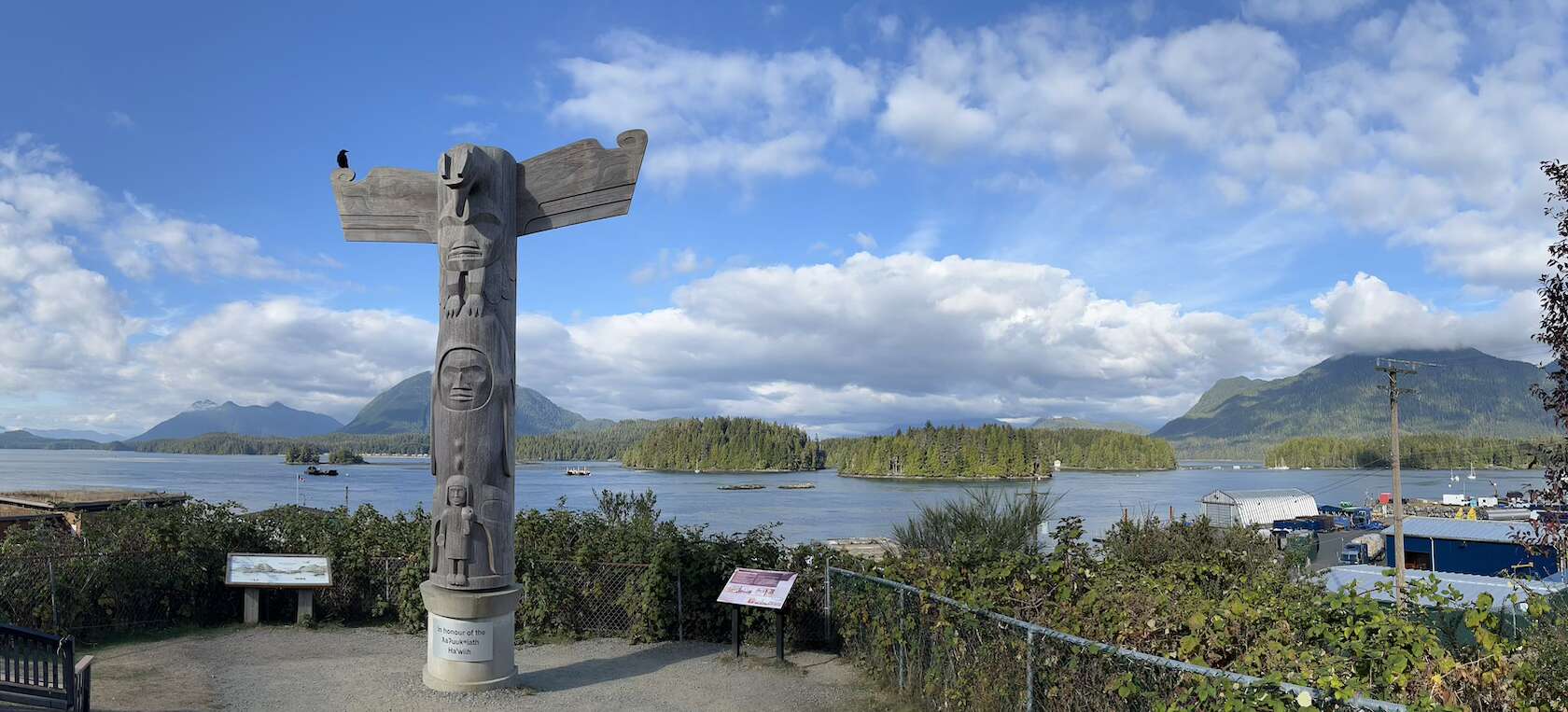
U of G-led report finds progress, but also stagnation, backsliding and new challenges
More than a decade after the final reports from the Truth and Reconciliation Commission of Canada outlined 94 Calls to Action, what is the state of reconciliation in Canada?
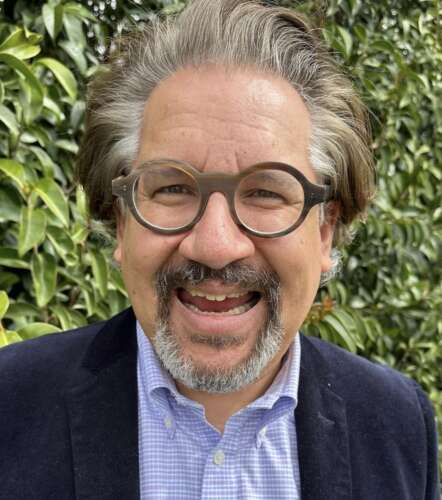
“There has been some meaningful progress toward reconciliation. However, challenges continue to impede progress. Reconciliation is something we need to actively work on,” says Dr. David MacDonald, professor in the Department of Political Science in the College of Social and Applied Human Sciences.
MacDonald recently authored a report for the National Council for Reconciliation, collecting insight from 20 leading Indigenous and settler experts on the current state of reconciliation. The report informed NCR’s annual report to Parliament as part of the 2024 National Council for Reconciliation Act.
Broken into three key categories – positive achievements, challenges and recommendations – MacDonald’s report spans individual and community efforts, as well as economic, education, government, health care, religious and legal systems. Much more needs to be done to ensure that Indigenous Peoples are central to all decisions that impact them, in line with the TRC’s 94 Calls to Action.
“There is a great deal of vibrancy and dynamism and forward positive momentum in Indigenous communities,” he says, which should lay the foundation for progress moving forward.
Reconciliation is about humans, lands, waters, plants and animals
Reconciliation is about respectful relationships, MacDonald says, and there are tremendous opportunities for Canada if Indigenous and non-Indigenous communities can work together and get those relationships right.
Reconciliation also moves beyond human relationships to ongoing relationships with lands, waters, plants and animals. “These are not Western concepts, and they make sense in the context if we want to live well together and maintain a good, healthy respect for our environment.”
Among the report’s positive findings, scholars agreed there is greater public awareness of First Nations, Inuit and Métis peoples, their histories and cultures as well as the major harms of the Indian Residential School system. “Good things have happened because Indigenous Peoples have organized, creating movements like Idle No More,” MacDonald says.
There is wider use of land acknowledgements, and an openness to reconciliation among students of all ages, the result of schools and universities advancing curriculum reform and Indigenous-led research.
Funding bodies have prioritized some Indigenous knowledge and research; however, funding has also been cut to programs that crucially impact the health and well-being of thousands of Indigenous Peoples.
The federal policies and legal framework around Treaty rights have evolved and the TRC laid the foundation for subsequent inquiries such as the National Inquiry into Missing and Murdered Indigenous Women and Girls (MMIWG).
Advocacy, education, bold leadership required
Still, the report stresses that major challenges remain. Most reconciliation measures have focused on “soft” or symbolic measures such as land acknowledgements, often on terms defined by settlers. There has been reluctance to embrace “hard” rights involving the return of stolen Indigenous lands, self-determination, and genuine free, prior and informed consent. Treaty Rights have also been subordinated.
Education about reconciliation remains uneven, and an active denialist movement has now become more virulent.
The report’s recommendations call for bold leadership from the National Council for Reconciliation to promote national conversations, counter denialism and advocate for Indigenous self-determination. Crucially, NCR must help construct measurement and reporting systems and establish Indigenous-defined benchmarks for evaluation and work with media to foster positive change.
“We must remain open to evolving definitions of reconciliation that reflect changing times,” MacDonald says. “We must be willing to ground reconciliation’s understandings in First Nations, Inuit and Métis-defined needs and visions.”
MacDonald is an Indo-Trinidadian and Scottish settler from Treaty 4 Territory, Regina, Sask. who shares an Insight Grant from the Social Sciences and Humanities Research Council with Dr. Sheryl Lightfoot on Indigenous practices of self-determination in comparative perspective. The second edition of his book, The Sleeping Giant Awakens: Genocide, Indian Residential Schools, and the Challenge of Conciliation will be released next year from University of Toronto Press.
MacDonald has also published some recent books on Indigenous-settler relations including Myths, History Wars, and Indigenous-Settler Relations in Canada and Other Settler States (Cambridge University Press, 2025), and with Emily Grafton, two co-edited University of Regina Press volumes: On Settler Colonialism in Canada: Lands and Peoples (2025) and On Settler Colonialism in Canada: Relations and Resistances (2026), focused on Indigenous-settler and race relations, decolonial change, Indigenous self-determination, and solidarities with Black and other communities of colour.
He is available for interviews.
Contact:
Dr. David MacDonald
dmacdo03@uoguelph.ca